

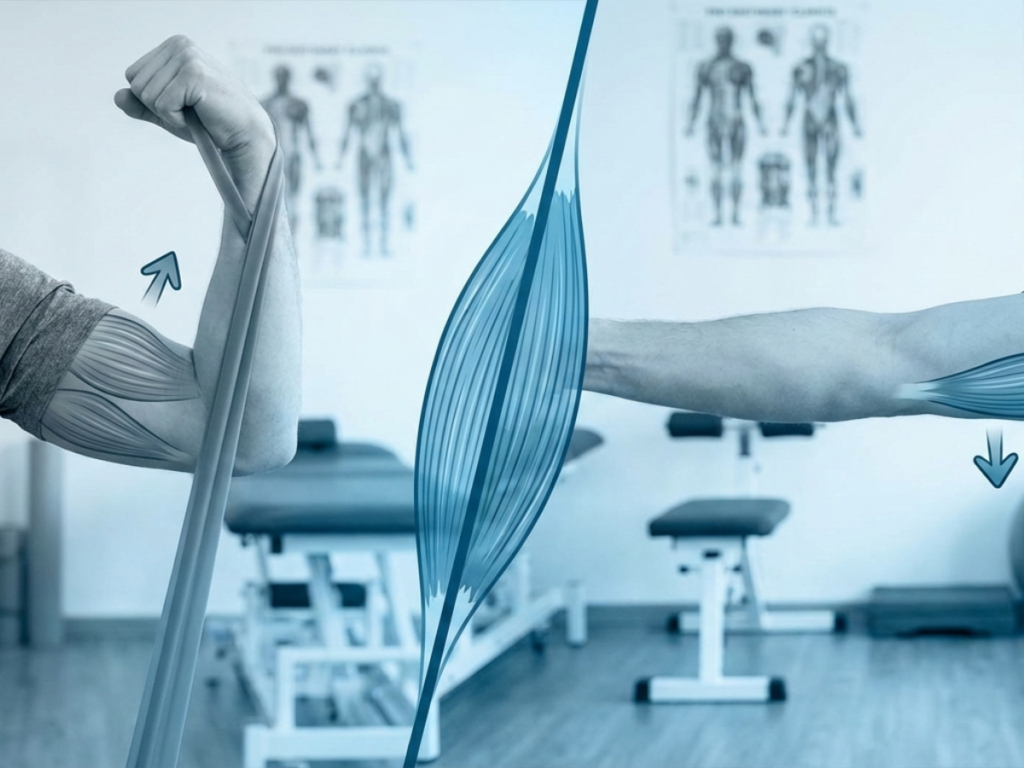
When people dream of bigger, more impressive arms, the first thing that pops into their head is usually the biceps. Those peaks when you flex in the mirror? They get all the glory. But here’s the thing that surprises most folks: the biceps vs triceps debate isn’t even close when it comes to actual arm size. If you’ve ever wondered why your arms aren’t filling out your sleeves the way you want, despite curling religiously, the answer often lies in the triceps—the larger, more underrated muscle on the back of your arm.
At Prime Hospital Panipat, our fitness and orthopedics consultants frequently chat with patients and gym-goers about arm development. Many come in frustrated that their biceps look decent when flexed but flat or unbalanced otherwise. The truth? Triceps make up roughly two-thirds of your upper arm’s muscle mass, while biceps account for only about one-third. Neglect the triceps, and you’re literally leaving massive potential on the table.
Let’s break this down thoroughly—from anatomy to training, aesthetics, strength, and how to balance both for the best-looking arms possible.
Biceps vs Triceps Anatomy: Understanding the Difference
First, a quick anatomy lesson to see why the comparison matters.
The biceps brachii (biceps for short) sits on the front of your upper arm. It has two heads:
- Long head (outer part, contributes to the peak when flexed).
- Short head (inner part, adds thickness).
Its main job? Elbow flexion (bending the arm) and supination (turning your palm up). That’s why curls feel so satisfying—they directly hit the “show” muscle.
The triceps brachii (triceps) occupies the back and sides of your upper arm. It has three heads:
- Long head (largest, crosses the shoulder joint, adds that horseshoe shape).
- Lateral head (outer sweep, visible when relaxed).
- Medial head (deeper, adds overall thickness).
Triceps extend the elbow (straightening the arm) and stabilize during pushing. Because they have an extra head and span a larger area, they naturally make up more volume—typically 60-70% of upper arm mass.
This size difference is key. Even untrained people have bigger triceps volume. When you build them properly, your arms look fuller from every angle—not just when you flex.
Which Muscle Contributes More to Arm Size? Triceps Win Hands Down
If your goal is bigger arms overall (girth, sleeve-filling mass), triceps are the real MVP.
Studies and bodybuilding consensus agree: triceps provide the majority of upper arm circumference. The long head alone adds significant bulk, especially when developed overhead. When viewed from the side or relaxed, well-built triceps create that thick, powerful look.
Biceps? They shine in the flexed pose—creating that coveted peak. But without solid triceps underneath and behind, the arms can look “front-heavy” or disproportionate. Think of it like this: biceps are the icing; triceps are the cake.
Many lifters obsess over curls and end up with decent peaks but skinny-looking arms overall. Flip the script—prioritize triceps—and watch your tape measurements jump.
Biceps vs Triceps for Aesthetics: The Visual Impact
Aesthetics aren’t just about raw size; proportion and shape matter too.
- Triceps dominance gives arms that horseshoe, 3D look from behind and side. The lateral head creates sweep; the long head adds depth.
- Biceps deliver the front-facing peak and definition when flexed—great for photos and mirrors.
- Balanced arms (both developed) look best overall: full when relaxed, peaked when flexed, thick from every angle.
Most pros and advanced lifters emphasize triceps for aesthetics. A huge triceps with average biceps still looks impressive relaxed. Huge biceps with small triceps? Often looks “skinny” from the back or side.
The brachialis (under the biceps) also plays a role—hammer curls build it for extra thickness, making arms appear wider from the front.
Strength Comparison: Biceps vs Triceps in Real Life
Strength-wise, it’s not one-sided.
Triceps handle heavy loads in pushing movements (bench press, overhead press, dips). They’re built for power.
Biceps excel in pulling (rows, chin-ups, curls). They’re strong per gram of muscle but smaller overall.
In daily life, triceps often get more use in pushing tasks, while biceps help in carrying and pulling.
For training, triceps tolerate heavier weights due to size; biceps respond well to higher volume and frequency.
How to Train Biceps vs Triceps: Balanced Workout Strategies
To get the best results, train both—but give triceps extra attention if size is the goal.
Key Principles
- Frequency: Arms recover fast—hit them 2-4 times/week.
- Volume: 10-20 sets per muscle group weekly.
- Progressive overload: Increase weight/reps over time.
- Variety: Hit all heads with different angles.
Triceps-Focused Approach (for Maximum Size)
Prioritize compound pushes + isolations.
- Close-Grip Bench Press (heavy, all heads).
- Dips (weighted for mass).
- Overhead Extensions (long head stretch).
- Skull Crushers or French Press.
- Pushdowns (lateral/medial emphasis).
Biceps-Focused Approach (for Peak & Definition)
- Barbell/EZ-Bar Curls.
- Preacher Curls (short head).
- Incline Dumbbell Curls (long head stretch).
- Hammer Curls (brachialis + forearms).
- Concentration Curls (peak contraction).
Best of Both Worlds: Balanced Arm Day Sample (45-60 min)
- Close-Grip Bench Press – 4 sets of 6-8 reps (triceps heavy).
- Weighted Dips – 3 sets of 8-10.
- Overhead Triceps Extension – 3 sets of 10-12.
- EZ-Bar Curl – 4 sets of 8-10 (biceps heavy).
- Hammer Curl – 3 sets of 10-12.
- Preacher Curl – 3 sets of 12-15.
Rest 60-90 seconds between sets. Add supersets (bicep curl immediately into tricep extension) for intensity.
Common Mistakes in Biceps vs Triceps Training
- Over-focusing biceps: Leads to imbalance and limited size.
- Neglecting triceps heads: Missing long head = flat-looking triceps.
- Poor form: Swinging curls or locking out too hard.
- No progression: Sticking to same weights forever.
- Skipping recovery: Arms need rest too.
Nutrition and Recovery for Bigger Arms
Muscles grow outside the gym.
- Protein: 1.6-2.2g per kg bodyweight.
- Calories: Slight surplus for growth.
- Sleep: 7-9 hours.
- Hydration: Water supports recovery.
Supplements like creatine help, but food first.
Conclusion: Build Balanced, Impressive Arms with Biceps vs Triceps Harmony
Biceps vs triceps isn’t about picking a winner—it’s about understanding that triceps drive most of the size, while biceps add the wow factor when flexed. Prioritize triceps for raw mass and fullness; develop biceps for peak and symmetry. Train both consistently, progressively, and with variety, and your arms will transform—looking bigger relaxed, peaked flexed, and balanced from every angle.
If you’re struggling with arm growth, plateaued, or dealing with imbalances, the team at Prime Hospital Panipat can help. Our fitness experts and orthopedists guide safe, effective training tailored to you.
Stop chasing peaks alone. Build the full package. Your sleeves will thank you.