

Gallstones and pancreatitis are two closely related conditions that can turn from mild discomfort into life-threatening emergencies very quickly. In Panipat and surrounding areas (Rohtak, Karnal, Hisar, Samalkha, Israna, Madlauda), we see many patients who initially ignore upper abdominal pain, nausea, or bloating, only to end up in severe pain, fever, or hospital admission days or weeks later.
At Prime Hospital Panipat, our gastroenterology, general surgery, and hepatobiliary teams treat hundreds of patients with gallstones and pancreatitis each year. One of the most important lessons we share with families is this: rapid intervention saves lives, reduces complications, shortens hospital stays, and often allows simpler, less expensive treatment.
In this guide, we explain why gallstones and pancreatitis are dangerous when delayed, the warning signs that demand immediate attention, how we diagnose and treat them at our hospital, the role of gallstone surgery in Panipat, recovery expectations, costs in 2026, and why choosing timely care at a well-equipped center like Prime Hospital makes all the difference.
Understanding Gallstones and How They Trigger Pancreatitis
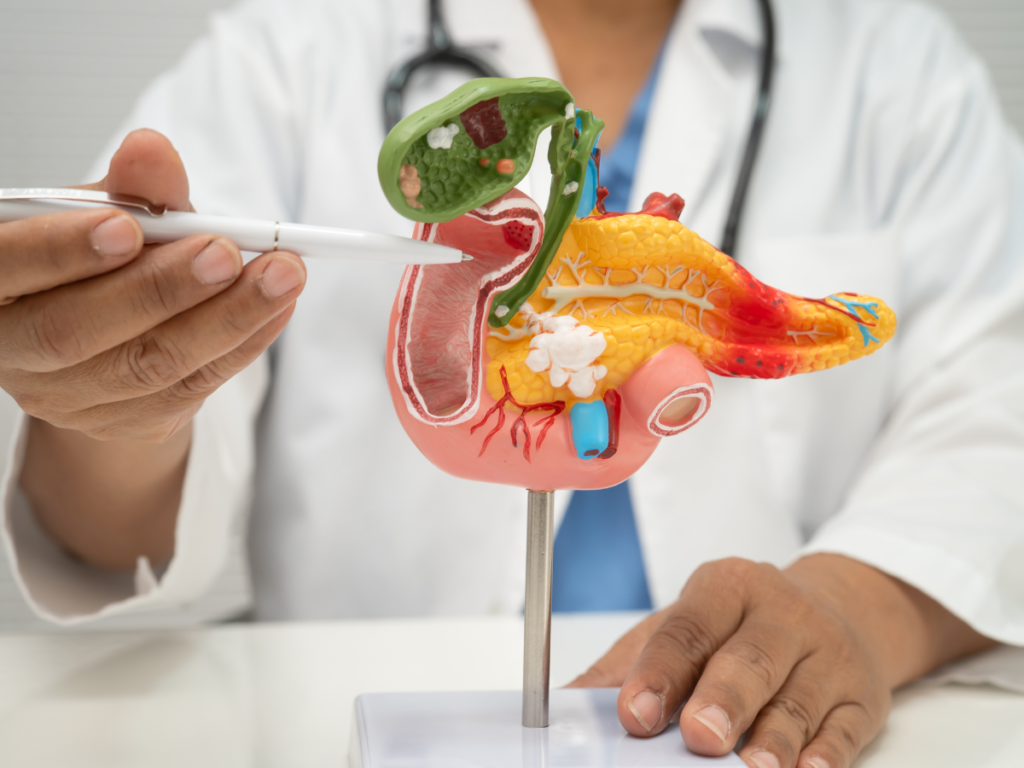
Gallstones are hard deposits that form in the gallbladder — a small pear-shaped organ under the liver that stores bile.
- Cholesterol stones — most common in India (linked to high-fat/refined-carb diets, obesity, diabetes, rapid weight loss, pregnancy, female gender)
- Pigment stones — seen in chronic hemolytic conditions or infections
Most gallstones stay silent (no symptoms) for years. Problems start when a stone:
- Blocks the cystic duct → acute cholecystitis (gallbladder inflammation)
- Passes into the common bile duct → obstructive jaundice, cholangitis (bile duct infection)
- Blocks the pancreatic duct opening → acute pancreatitis (inflammation of the pancreas)
Gallstone pancreatitis is one of the leading causes of acute pancreatitis in North India — and it can range from mild (self-resolving) to severe (organ failure, infected necrosis, ICU admission).
Why Rapid Intervention Is Critical in Gallstones and Pancreatitis
Delaying treatment increases risk dramatically:
- Gallbladder — A blocked stone can lead to gangrene, perforation, abscess, or peritonitis (infection spreading in the abdomen) within 24–72 hours.
- Pancreatitis — Severe cases cause systemic inflammation, lung injury (ARDS), kidney failure, shock, and death if not managed early.
- Common bile duct stones — Cause jaundice, severe infection (cholangitis), and sepsis.
- Recurrent attacks — Each episode of pancreatitis causes more permanent damage to the pancreas (chronic pancreatitis, diabetes, chronic pain).
Studies show that performing gallstone surgery in Panipat (cholecystectomy) within 48–72 hours of symptom onset in suitable patients significantly reduces complications, hospital stay, and overall cost compared to delaying for weeks or months.
Warning Signs That Require Immediate Medical Attention
Do not wait or try home remedies if you or your family member has:
- Severe upper abdominal pain (right side or central) that lasts >1–2 hours
- Pain radiating to the back or right shoulder
- Nausea and repeated vomiting
- Fever with chills
- Yellow eyes/skin (jaundice)
- Dark urine and pale stools
- Rapid breathing or shortness of breath
- Confusion or extreme weakness
- Swelling or tenderness in the abdomen
These are signs of possible acute cholecystitis, cholangitis, or severe pancreatitis — all emergencies that need hospital evaluation within hours.
How We Diagnose Gallstones and Pancreatitis at Prime Hospital Panipat
Accurate and fast diagnosis is the first step to safe management.
- Ultrasound abdomen — First-line test (detects gallstones, gallbladder wall thickening, bile duct dilation, pancreatitis changes)
- Blood tests — Liver function tests (bilirubin, ALT, AST, ALP), amylase/lipase (elevated in pancreatitis), CBC (infection/inflammation), CRP
- CT abdomen — For severe pancreatitis (to assess necrosis) or when ultrasound is unclear
- MRCP — Non-invasive MR imaging of bile and pancreatic ducts (if stones suspected in common bile duct)
- ERCP — Diagnostic + therapeutic (removes stones from bile duct, places stent)
Most patients get a clear diagnosis within hours of arrival.
Treatment Approaches: From Conservative to Surgical
Mild gallstone pain / early cholecystitis
- IV fluids, pain control, antibiotics, fasting
- Gallstone surgery in Panipat (laparoscopic cholecystectomy) planned within 24–72 hours if stable
Acute pancreatitis (gallstone-related)
- IV fluids (aggressive hydration — most important early step)
- Pain management
- NPO (nothing by mouth) initially
- Antibiotics only if infection proven
- Gallstone surgery in Panipat (cholecystectomy) usually during same admission (within 48–72 hours) once pancreatitis stabilizes — reduces recurrence risk from 30–50% to <5%
Blocked common bile duct (jaundice + cholangitis)
- Urgent ERCP to remove stone and place stent
- Followed by gallstone surgery in Panipat (cholecystectomy) after stabilization
Severe pancreatitis
- ICU monitoring
- Organ support (ventilation, dialysis if needed)
- Nutritional support (enteral feeding preferred)
- Delayed cholecystectomy (after 4–6 weeks) in severe cases
Laparoscopic cholecystectomy (keyhole gallbladder removal) is the standard at our center — small incisions, less pain, faster recovery (1–2 days hospital stay).
Cost of Gallstone Surgery in Panipat (2026 Estimates)
- Laparoscopic cholecystectomy (routine case): ₹55,000 – ₹1,10,000
- Open cholecystectomy (if needed): ₹45,000 – ₹90,000
- ERCP + stone removal + stenting: ₹35,000 – ₹80,000
- Severe pancreatitis with ICU stay: ₹1,50,000 – ₹5,00,000+ (depending on duration)
Many patients use Ayushman Bharat, PMJAY, or private insurance to reduce out-of-pocket costs.
Recovery After Gallstone Surgery in Panipat
- Laparoscopic: Walk same day, light food next day, back to office in 5–10 days
- Open surgery: 4–7 days hospital stay, 3–6 weeks full recovery
- Pancreatitis recovery: 5–14 days for mild cases; weeks to months for severe
Conclusion: Rapid Intervention in Gallstones and Pancreatitis Saves Lives and Reduces Suffering
Gallstones and gallstone pancreatitis are treatable — but only when action is taken quickly. Waiting for “it will go away” or trying home remedies can turn a simple laparoscopic procedure into emergency open surgery, prolonged ICU stay, or life-threatening complications.
If you or your loved one has upper abdominal pain, nausea, vomiting, fever, jaundice, or any suspicion of gallstones/pancreatitis, don’t delay. Rapid diagnosis and timely gallstone surgery in Panipat at a well-equipped center can prevent serious harm.
At Prime Hospital Panipat, our gastroenterology, surgical, and critical care teams are available 24×7 for emergency evaluation, ERCP, and gallstone surgery in Panipat — with modern laparoscopic facilities, experienced surgeons, and patient-first care.
If you have gallstone symptoms or have been advised surgery, contact us today. Quick action gives the best chance for smooth recovery and long-term health.