

Starting dialysis can feel overwhelming—whether it’s your first session or you’re supporting a loved one. Questions like “How long will each session take?”, “Will it hurt?”, “What kind of care will I receive?”, and “Is the center clean and safe?” are completely normal. If you’re in Panipat or nearby areas (Rohtak, Karnal, Hisar, Samalkha, or Delhi NCR border), finding a reliable dialysis center in Panipat is one of the most important decisions you’ll make for long-term kidney care.
At Prime Hospital Panipat, we understand the anxiety that comes with starting hemodialysis. Our dialysis unit is designed with patient comfort, safety, and quality of life in mind. In this detailed guide, we walk you through exactly what to expect at a dialysis center in Panipat—focusing on the real patient experience at Prime Hospital—from your first visit, through every session, to long-term care and support.
Your First Visit to the Dialysis Center in Panipat
Most patients come to us after a nephrologist referral or after being diagnosed with end-stage kidney disease (ESKD). Here’s what typically happens on day one:
- Detailed consultation with nephrologist — Review of medical history, current medications, previous dialysis (if any), blood reports, and ultrasound.
- Vascular access assessment — Checking if you already have an AV fistula, graft, or temporary catheter (Permcath / jugular catheter).
- Pre-dialysis blood tests — Complete blood count, electrolytes, urea, creatinine, calcium, phosphorus, PTH, hemoglobin, iron studies.
- Dialysis prescription — Deciding frequency (usually 3 sessions per week), duration (3.5–4.5 hours), dry weight, and dialyzer type.
- Counseling session — Our dialysis coordinator explains machine functioning, diet restrictions, fluid limits, medicines, and what to bring to each session.
- Facility tour — You see the dialysis room, machines, nursing station, and waiting area.
This visit usually takes 1–2 hours and is the foundation of your personalized dialysis plan.
What Happens During a Typical Dialysis Session at Prime Hospital Panipat
Each session follows a consistent, patient-centered routine:
- Check-in & Pre-dialysis assessment (10–15 min)
- Weight check (to calculate fluid removal goal)
- Blood pressure, pulse, temperature
- Review of any new symptoms or medicines
- Hand hygiene & changing into hospital-provided clothes (if preferred)
- Starting dialysis (5–10 min)
- Connecting to the machine via AV fistula, graft, or catheter
- Heparin or citrate used as anticoagulant (to prevent clotting)
- Machine settings adjusted (blood flow rate 300–400 mL/min, dialysate flow 500–800 mL/min)
- During the session (3.5–4.5 hours)
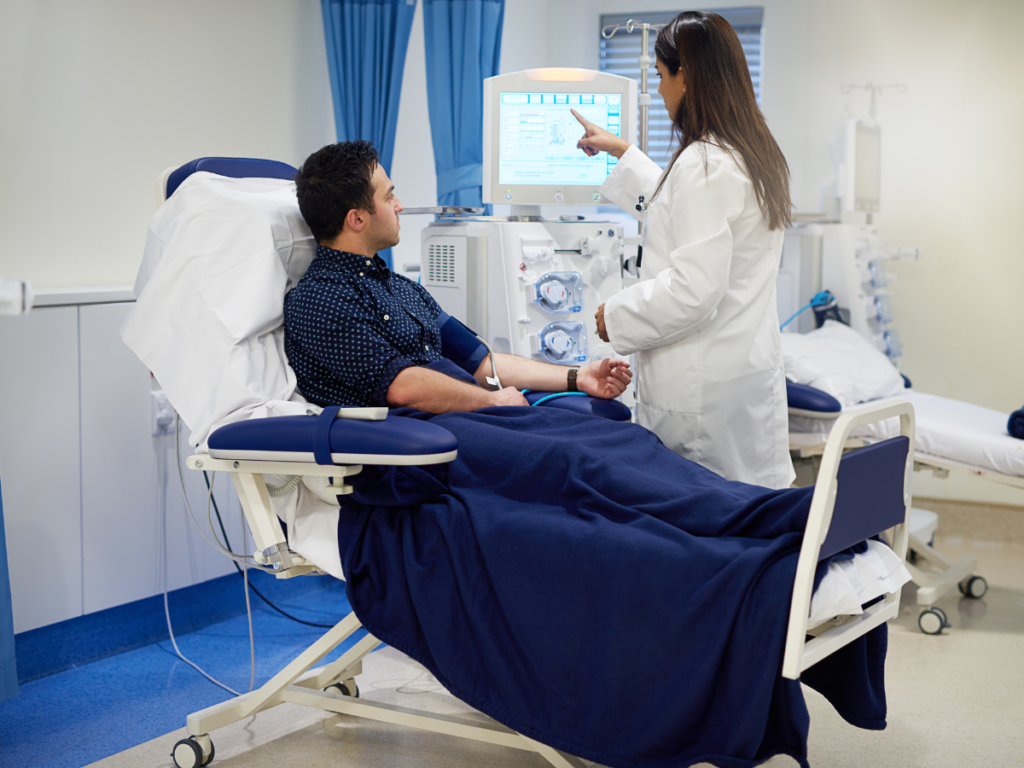
- You can relax in a comfortable recliner chair
- Watch TV (personal screen available), use phone, read, listen to music, or sleep
- Nurses check BP, pulse, and machine parameters every 30–60 minutes
- Snacks & filtered water provided (fluid-restricted patients get measured amounts)
- Pain-free for most—some feel mild cramping if fluid removal is fast
- Ending the session
- Blood returned to your body
- Needle sites compressed (fistula) or catheter locked (Permcath)
- Final weight & BP check
- Post-dialysis instructions & next appointment card
Facilities & Patient Care Standards at Our Dialysis Center in Panipat
We prioritize safety, hygiene, and dignity:
- Individual stations — Each patient gets a dedicated machine with privacy curtains
- Modern hemodialysis machines — Fresenius 5008S / 4008S or equivalent (online HDF available for better clearance)
- High-flux & high-efficiency dialyzers — Better toxin removal
- RO-purified water — Meets international AAMI standards
- Strict infection control — Single-use needles, gloves, masks, machine disinfection after every patient
- Experienced staff — Qualified dialysis technicians, trained nurses, round-the-clock nephrologist support
- Emergency backup — Generator, oxygen, defibrillator, emergency medicines
- Comfort features — Adjustable chairs, personal TV screens, Wi-Fi, clean toilets, waiting area for attendants
Common Patient Concerns & How We Address Them
- Will it hurt? Needle insertion (fistula) feels like a routine blood draw—numbing spray available.
- How long per session? 3.5–4.5 hours, 3 times/week (usually Mon-Wed-Fri or Tue-Thu-Sat).
- Can I eat during dialysis? Yes—light snacks (low potassium/phosphorus) provided.
- Can family stay? One attendant allowed; they can wait in the reception area.
- What if I feel unwell during session? Nurses monitor continuously; machine alarms immediately alert staff.
- Travel or vacation? We provide transfer summaries for dialysis at other centers.
Costs of Dialysis in Panipat (2026 Estimates)
- Single session (hemodialysis): ₹2,200 – ₹3,800 (varies by machine type & dialyzer)
- Monthly (12 sessions): ₹26,000 – ₹45,000
- HDF (hemodiafiltration) session: ₹3,500 – ₹5,500
- AV fistula creation surgery: ₹18,000 – ₹45,000
- Permcath insertion: ₹25,000 – ₹60,000
- Monthly EPO + iron injections: ₹4,000 – ₹12,000 (depending on dose)
Many patients use Ayushman Bharat, PMJAY, or private insurance to reduce out-of-pocket costs significantly.
Lifestyle & Diet Tips While on Dialysis
- Fluid restriction: Usually 500–800 mL/day + urine output
- Low potassium: Avoid banana, orange, tomato, potato, spinach
- Low phosphorus: Limit dairy, nuts, cola, whole grains
- Adequate protein: Eggs, fish, chicken, paneer (high biological value)
- Salt restriction: Helps control BP and fluid
- Regular exercise: Walking, light yoga (as advised)
Conclusion: What to Expect at a Dialysis Center in Panipat Comes Down to Care & Confidence
Starting dialysis is life-changing, but it doesn’t have to feel frightening. At a good dialysis center in Panipat like ours, you can expect:
- Clean, modern machines
- Trained, caring staff
- Personalized treatment
- Clear communication
- Comfort during sessions
- Support for diet, access care, and emotional well-being
You deserve a center that treats you like family—not just a number. If you or your loved one is starting dialysis or looking for a reliable center in Panipat, Rohtak, Hisar, or nearby areas, we invite you to visit us.
At Prime Hospital Panipat, we combine advanced technology with genuine compassion—because every dialysis session should feel safe, dignified, and hopeful.
Call or visit today to schedule a tour or consultation. We’re here to support you every step of the way.