

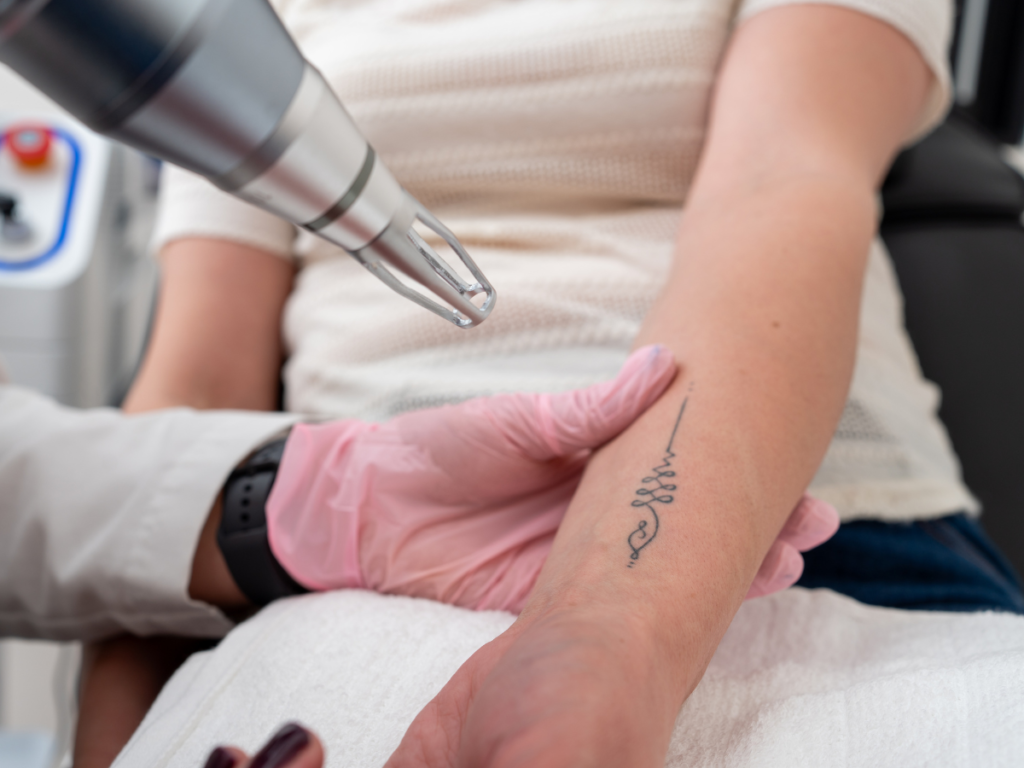
Deciding to remove a tattoo is a big step—whether it’s regret over an old design, a career change, fading ink that no longer looks good, or simply wanting clear skin again. One of the most common questions people ask is: how long does tattoo removal take? The honest answer is that it’s not a quick fix—laser tattoo removal (the most effective and widely used method) is a gradual process requiring multiple sessions spread over months to a couple of years, depending on your tattoo and individual factors.
At Prime Hospital Panipat, our dermatology and laser specialists help patients in Haryana and nearby areas (including Rohtak, Hisar, Karnal, and Delhi NCR) navigate this journey every week. With modern picosecond and Q-switched lasers now widely available in India, results are faster and safer than ever before. But patience is key—rushing the process risks poor outcomes or scarring.
In this detailed 3000-word guide, we’ll cover everything: how laser removal works, the typical timeline (number of sessions and spacing), factors that affect duration, what each session feels like, healing between treatments, realistic expectations for fading, costs in India (2026 estimates), aftercare tips, and when to see a specialist.
How Long Does Tattoo Removal Take? The Overall Timeline
How long does tattoo removal take depends on two main timelines:
- Per-session duration — Each laser appointment lasts 5–60 minutes, depending on tattoo size.
- Total treatment course — Full removal usually requires 4–15 sessions (average 6–10), spaced 6–12 weeks apart.
Putting it together:
- Small, simple tattoos (black ink, amateur, <2 inches): Often 4–6 sessions → total time 6–12 months.
- Average professional tattoos (multi-color, medium size): 6–10 sessions → 9–18 months.
- Large, dense, or colorful tattoos (full sleeves, heavy black/greens/blues): 8–15+ sessions → 1–3 years.
- Fading (not full removal): 2–5 sessions → 3–9 months for noticeable lightening.
Sessions are spaced out because your immune system needs time to flush out broken ink particles. Treating too soon risks skin damage without better results.
Modern picosecond lasers (PicoSure, PicoWay) often reduce sessions by 30–50% compared to older nanosecond Q-switched lasers, making the process faster overall.
What Happens in Each Laser Tattoo Removal Session?
A typical session follows this flow:
- Consultation & Prep (10–15 minutes) — Skin assessment, patch test if first time, numbing cream applied (30–60 minutes wait).
- Laser Treatment (5–60 minutes) — Laser pulses target ink, breaking it into tiny fragments. You wear protective eyewear. Feels like hot rubber band snaps or pinpricks—tolerable with numbing.
- Immediate Aftercare — Ice pack, soothing gel, dressing if blistered.
Right after:
- Skin turns white (frosting), then red/swollen.
- Blisters/crusting possible in 1–3 days.
- Fading begins within 2–4 weeks as body clears ink.
Healing Time Between Sessions: Why 6–12 Weeks Is Standard
The waiting period between treatments is crucial for safety and results.
Recommended interval: 6–8 weeks (some experts say 8–12 weeks for darker skin or aggressive treatments).
Reasons for spacing:
- Skin needs time to heal from thermal injury (redness, blisters, scabs resolve in 1–3 weeks).
- Immune system gradually removes fragmented ink particles (peak clearance around 4–8 weeks).
- Treating too early can cause burns, scarring, hyper/hypopigmentation, or trap ink deeper.
During the 6–12 weeks:
- Weeks 1–2: Inflammation, scabbing, peeling.
- Weeks 3–6: Ink fades noticeably; skin returns to normal.
- Weeks 6–8+: Maximum clearance achieved; ready for next session.
Your dermatologist adjusts based on skin type (Fitzpatrick scale), tattoo response, and healing.
Factors That Influence How Long Tattoo Removal Takes
No two tattoos are identical—several variables determine the total timeline:
- Tattoo Size & Density Larger/more ink = more sessions.
- Ink Color Black/dark blue: Easiest, fastest (4–8 sessions). Green/red/yellow: Moderate. White/light colors: Hardest, often longest.
- Tattoo Age & Depth Older tattoos fade faster (ink has migrated/shallow). Professional deep tattoos take longer than amateur/hand-poked ones.
- Skin Type Fair skin (Fitzpatrick I–III): Faster clearance, fewer side effects. Darker Indian skin tones (IV–VI): Slower to avoid burns/pigmentation issues; may need more sessions.
- Laser Technology Picosecond lasers (PicoWay, PicoSure): 30–50% fewer sessions than nanosecond Q-switched. Widely available in India now.
- Your Immune System & Lifestyle Healthy diet, hydration, no smoking, good sleep = faster clearance.
- Location on Body Torso/arms: Faster (better blood flow). Hands/feet/lower legs: Slower.
Realistic Expectations: What Results Look Like Over Time
After 1–2 sessions: 20–40% fading; tattoo looks lighter but still visible. After 3–5 sessions: 50–70% gone; many stop here for significant lightening. After 6–10 sessions: 80–100% clearance for most; some ghosting (shadow) remains. After 10+ sessions: Near-complete removal; stubborn colors may leave faint outlines.
Full clearance is possible for 70–90% of tattoos with modern lasers, but 100% perfect skin is not guaranteed—some retain faint traces.
Tattoo Removal Cost in India (2026 Estimates – Haryana Focus)
Costs per session vary by clinic, laser type, tattoo size, and city.
Per session (small to medium tattoo):
- Tier-2 cities (Panipat, Rohtak, Hisar, Karnal): ₹2,000 – ₹8,000
- Delhi NCR/Gurugram: ₹4,000 – ₹15,000
- Premium clinics (picosecond): ₹8,000 – ₹25,000+
Total course estimate:
- Small black tattoo (4–6 sessions): ₹10,000 – ₹50,000
- Medium multi-color (6–10 sessions): ₹30,000 – ₹1,20,000
- Large/complex (10+ sessions): ₹80,000 – ₹3,00,000+
Many clinics offer packages (e.g., 6 sessions at discounted rate).
Aftercare & Healing Tips Between Sessions
- Keep area clean/dry for 48 hours.
- Apply antibiotic ointment + moisturizer.
- Avoid sun exposure (use SPF 50+).
- No picking scabs/blisters.
- No swimming/gym/sauna for 1–2 weeks.
- Ice for swelling; painkillers if needed.
Proper care speeds healing and maximizes ink clearance.
Alternatives to Laser Removal (When Laser Isn’t Ideal)
- Surgical excision (small tattoos): One procedure, scar possible.
- Dermabrasion/salabrasion: Older methods, rarely used now.
- Chemical peels (TCA): Risky, not recommended.
- Cover-up tattoos: Not removal, just concealment.
Laser remains gold standard for most.
Conclusion: Tattoo Removal Takes Time, But Modern Lasers Make It Faster & Safer
How long does tattoo removal take? Each session is quick (10–60 minutes), but the full process typically spans 6 months to 2+ years, with 4–15 sessions spaced 6–12 weeks apart. Modern picosecond lasers available in Haryana and across India have cut timelines significantly compared to older tech.
Patience, realistic expectations, and choosing a reputable clinic make all the difference. If you’re ready to start or just exploring options, the team at Prime Hospital Panipat offers consultations, patch tests, and transparent plans tailored to your tattoo and skin type.
Don’t let an unwanted tattoo hold you back—reach out today. Clear skin is achievable, and we’re here to guide you every step.